
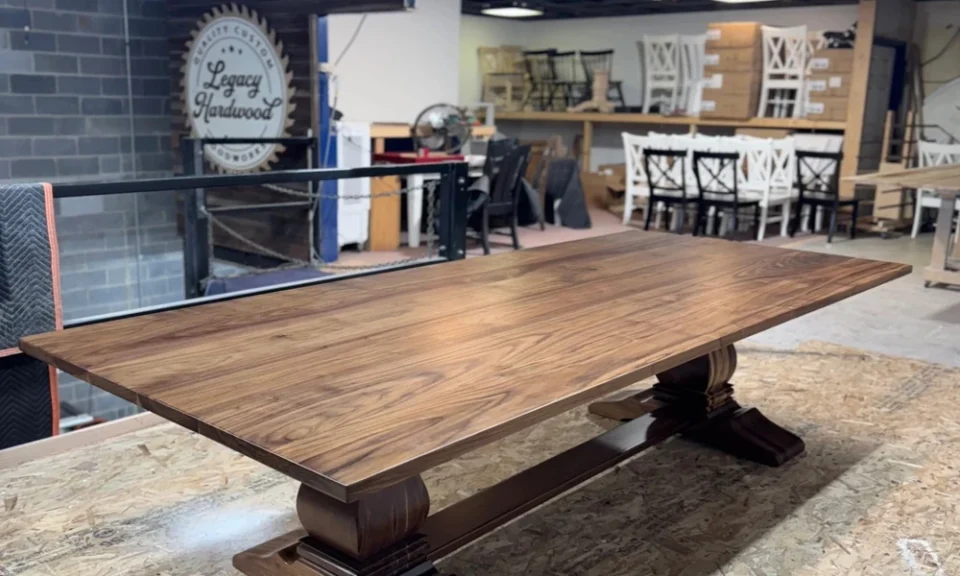
You already know the table matters. You want everyday comfort and an easy shift to hosting. I help people make that call with clear rules that cut through guesswork.
If you are comparing dining tables for daily meals and weekend gatherings, use the steps below to narrow your options fast. I focus on fit, function, and finish. That means the right size for your room, a base that leaves enough legroom, a shape that guides conversation, and a surface that handles real life.
You will see picks by room size and lifestyle, guidance on shapes and bases, and a short buying checklist. I also point you to Legacy Hardwood, a maker that stands out for custom sizing, solid wood choices, and hands-on guidance.
Start With Size: Fit The Room First
Measure your dining area before you look at styles. The best-looking table fails if the chairs scrape the wall.
- Leave 36 inches of clearance from the table edge to walls or furniture where you need to walk.
- Plan 24 inches of width per person along the long sides for comfort.
- For round tables, allow 24 inches of arc per person.
Use these quick targets:
- 4 people: 36 to 42 inches round or a 48 by 30 inch rectangle
- 6 people: 60 to 72 inches by 36 to 38 inches, or 54 to 60 inches round
- 8 people: 84 to 96 inches by 40 inches, or 72 inches round
- 10 to 12 people: 108 to 120 inches by 42 inches, or 84 to 96 inches oval
If you host only a few times a year, an extension table can keep daily size compact while covering holiday needs.
Choose The Right Shape For Your Space
Each shape changes how the room feels and how guests interact.
- Rectangle: Best for most rooms. It aligns with walls, fits benches, and handles serving dishes down the center.
- Round: Great for square rooms and better eye contact. Pedestal bases help with knee space.
- Oval: Softer corners improve flow in tighter walkways. Seats more than a round of equal width.
- Square: Works in square rooms for four. Add a leaf to turn square into rectangle for guests.
I prefer round or oval for conversation and small spaces. I use rectangle in most other cases because it fits the room grid and seating plans well.
Pick A Base That Leaves Room For Knees
Legroom affects daily comfort. Test where legs and chair legs hit the base.
- Four legs: Classic and stable. Watch corner crowding on smaller sizes.
- Trestle: Strong support with improved end seating. Good for longer tables.
- Pedestal: Best for round tables. Keeps edges clear for chairs and easy slide-in.
If you plan to seat a chair on each end often, avoid a base that blocks knees at the ends.
Materials And Finishes That Last
You want a surface that earns patina without looking tired.
- Solid hardwood: Durable and repairable. Oak, maple, and walnut handle daily use well.
- Veneer over engineered core: Stable and cost-friendly. Less repairable after deep damage.
- Metal base with wood top: Adds stability and contrast.
- Glass or stone: Sleek look. Needs more upkeep on fingerprints and can feel cold in family spaces.
A satin lacquer or similar durable topcoat offers a good blend of protection and natural feel. For rustic charm with grip, band-sawn oak adds texture. If you prefer a cleaner look, choose a smooth top.
Why Choose Legacy Hardwood
You want options that match your space, not the other way around. Here is why I recommend Legacy Hardwood if you want custom fit and real wood quality.
- Custom sizing: They tailor length and width for tight nooks or long great rooms.
- Real hardwoods: Standard species plus additional options on request.
- Finish control: Stains, paints, and distressing levels to match your room. You can choose a clean finish or a more character-rich surface.
- Smart build details: Jointed-top options can reduce individual board gaps over time while keeping natural knots. Band-sawn oak offers texture if you want it.
- Hands-on guidance: Design consultants help with size, seating count, and finish choices based on your layout and budget.
- Local craftsmanship: Built and finished in Virginia with the character of handmade work. Minor variations are part of the look and feel, which adds authenticity.
If you are near Chantilly, a visit to their shop and showroom lets you see finishes, sit in chairs, and talk specs. If you order online or by phone, they help confirm dimensions and choices before production. That peace of mind matters with a custom table.
Everyday Features That Make Hosting Easier
Think through how you serve meals and clear plates.
- Extensions: Breadboard or center leaves turn a family table into a party table.
- Rounded corners: Friendlier for kids and tight passes.
- Table height: Standard dining height is 29 to 30 inches. Counter height can work in open kitchens but is less flexible for mixed-age groups.
- Chair and bench mix: Chairs keep personal space. Benches add seats on one side without bulk. Place a bench on the wall side to keep the walkway clear.
Picks By Home and Habit
Use these scenario guides to speed up your short list.
- Small apartment or breakfast nook: 40 to 42 inch round pedestal in oak or maple. Add two stackable chairs and keep two folding chairs for guests.
- Open-concept family room: 84 by 40 inch rectangle with a trestle base. Pair four chairs with a bench for kid-friendly seating.
- Formal dining room: 96 by 42 inch rectangle in walnut or a 72 inch oval. Keep extensions handy for holidays.
- Frequent entertainers: 72 inch round pedestal or a 108 by 42 inch rectangle with center leaves. Choose a durable satin finish and chairs with wipeable seats.
- Kid-heavy homes: Durable hardwood with rounded edges and a forgiving finish. A bench on one side makes cleanup quick.
Legacy Hardwood can build each of these formats with the exact size and finish you need. If you want a special stain or a textured top, ask about options during planning.
Care And Maintenance That Protects Your Investment
A few habits keep a wood table looking sharp for years.
- Use placemats or a runner under hot dishes.
- Wipe spills fast with a soft cloth.
- Use felt pads under decor and chargers.
- Keep indoor humidity steady to limit seasonal wood movement.
- For textured or distressed tops, clean with a soft brush and damp cloth to reach grooves.
Expect natural character to show over time. Small color shifts and fine movement are normal with solid wood.
Your Buying Checklist
Before you place an order, confirm these items.
1. Room size and clearance marked with tape on the floor
3. Shape and base chosen for legroom and flow
4. Exact top size and extension plan
5. Wood species, finish, and any distressing level
6. Edge profile and corner radius for comfort
7. Chair mix and bench length that matches the table and space
8. Lead time window, delivery plan, and warranty terms
If you want a table built around your room and routine, Legacy Hardwood is a strong choice. They help you lock in the right size, wood, and finish, and they build with the care that solid wood deserves. With the plan above, you can select a table that serves breakfast on Monday and hosts twelve on Saturday without a single compromise.
