
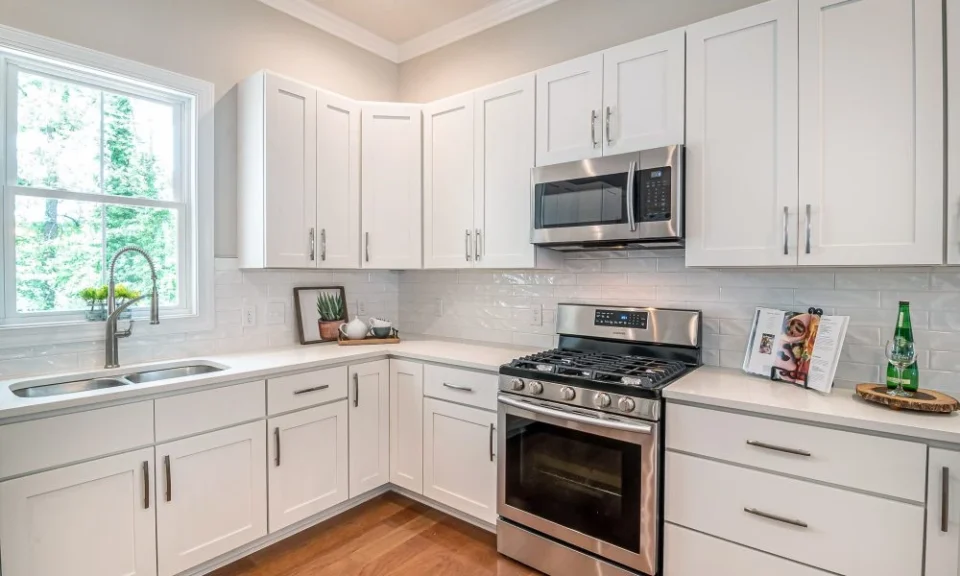
If your kitchen cabinets are showing signs of age but are still structurally sound, you may not need to replace them entirely. Many homeowners are discovering that kitchen cabinet resurfacing offers an affordable way to modernize their kitchens while avoiding the expense and disruption of a full cabinet replacement.
Before starting a remodeling project, it’s natural to have questions. How does resurfacing work? Is it durable? Will it increase your home’s value? Below are answers to the questions homeowners ask most frequently.
What Is Kitchen Cabinet Resurfacing?
Kitchen cabinet resurfacing is a remodeling process that updates the visible exterior of your existing cabinets while keeping the original cabinet boxes in place.
- Replace cabinet doors.
- Install new drawer fronts.
- Cover exposed cabinet frames with matching veneer or laminate.
- Upgrade hinges and hardware.
- Add decorative moldings if desired.
The goal is to give the kitchen a completely refreshed appearance without rebuilding the entire cabinet system.
Is Resurfacing the Same as Refinishing?
No.
These two remodeling methods are often confused, but they produce different results.
Refinishing involves sanding, staining, or painting your existing cabinet doors.
Resurfacing replaces those doors entirely while updating the cabinet exteriors with new materials.
Homeowners comparing kitchen cabinet refinishing with resurfacing usually choose resurfacing when they want a more dramatic transformation and access to modern door styles.
How Do I Know if My Cabinets Are Good Candidates?
Resurfacing works best when the cabinet boxes remain:
- Structurally solid.
- Properly installed.
- Free from major water damage.
- Square and level.
- Functional for your storage needs.
If the internal structure is in good condition, resurfacing can deliver impressive results at a lower cost than replacement.
How Long Does a Resurfacing Project Take?
Although every kitchen is different, resurfacing is generally completed much faster than installing entirely new cabinets.
Since contractors aren’t removing cabinet boxes or rebuilding the kitchen layout, installation typically involves less demolition and fewer construction delays.
That means homeowners can return to using their kitchens sooner.
Is Kitchen Cabinet Resurfacing Durable?
Yes-when quality materials and professional installation are used.
Modern resurfacing products are designed to withstand everyday use, including:
- Frequent opening and closing.
- Moisture from cooking.
- Routine cleaning.
- Normal household wear.
Choosing experienced installers is essential because proper alignment, veneer application, and hardware installation all contribute to long-term durability.
Can I Change the Style of My Kitchen?
Absolutely.
One of the biggest advantages of resurfacing is design flexibility.
Popular cabinet styles include:
- Shaker.
- Flat-panel.
- Raised-panel.
- Contemporary slab.
- Glass-front cabinet doors.
You can also choose from painted finishes, natural wood veneers, textured laminates, and a wide variety of hardware styles.
Even though the cabinet boxes remain in place, the finished kitchen often looks completely redesigned.
Is It Less Expensive Than Cabinet Replacement?
In many situations, yes.
Because existing cabinet boxes remain intact, homeowners save money on:
- Demolition.
- New cabinet construction.
- Labor.
- Material disposal.
- Installation time.
These savings often allow homeowners to include additional upgrades such as countertops, backsplashes, lighting, or flooring without exceeding their remodeling budget.
Can I Add New Features During Resurfacing?
Definitely.
Many homeowners improve functionality by adding:
- Soft-close hinges.
- Pull-out shelves.
- Drawer organizers.
- Spice storage.
- Roll-out trash bins.
- Interior cabinet lighting.
These upgrades make the kitchen more enjoyable to use while complementing the updated appearance.
Will Resurfacing Increase Home Value?
While every real estate market is different, updated kitchens consistently attract buyer attention.
Modern cabinetry improves:
- First impressions.
- Overall kitchen appearance.
- Buyer confidence.
- Market appeal.
Although resurfacing isn’t a complete kitchen renovation, it often delivers an excellent return on investment because it refreshes one of the most visible areas of the home.
Where Can I Find Remodeling Inspiration?
Choosing cabinet colors and finishes becomes much easier after reviewing completed remodeling projects.
Many homeowners visit the Ketchen Renovation Hub for ideas on combining resurfaced cabinets with updated countertops, backsplashes, flooring, and lighting. Looking at complete kitchens instead of individual products helps create a more balanced and cohesive remodeling plan.
What Should I Ask Before Hiring a Contractor?
- How many cabinet resurfacing projects have you completed?
- What materials do you recommend?
- What warranties are included?
- Can I see examples of completed work?
- How long will the project take?
Clear communication at the beginning of the project helps ensure realistic expectations and a smoother remodeling experience.
What Homeowners Should Remember
Choosing kitchen cabinet resurfacing is about making the most of what you already have. If your cabinet boxes remain in excellent condition, resurfacing allows you to enjoy the appearance of a brand-new kitchen without paying for unnecessary replacement.
By understanding the process, comparing resurfacing with refinishing, selecting durable materials, and working with experienced professionals, you can confidently invest in a kitchen upgrade that combines beauty, functionality, and long-term value. The best remodeling decisions aren’t always the most expensive-they’re the ones that solve the right problem.
