
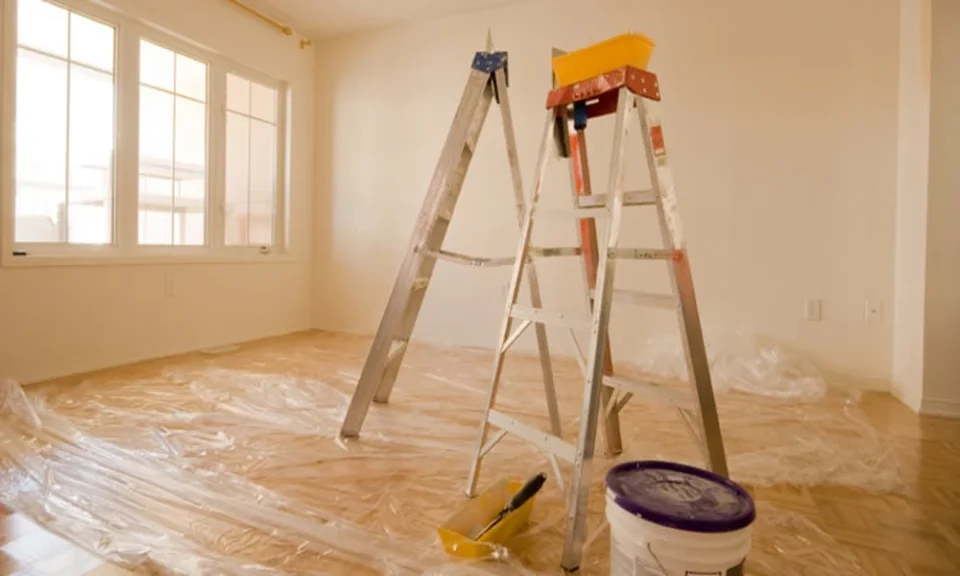
A standard double bedroom, walls and ceiling, plus the woodwork, costs between £500 and £900 with a reputable London firm. Rather than leave that as a vague range, take one realistic quote for a 4m x 3m bedroom and pull it apart line by line, because once you understand each line, you can read any quote that lands in your inbox.
Line One, Labour: £450
Labour dominates every decorating quote. A good London painter charges £200 to £280 per day, and a full room, ceiling, walls, skirting, door, frame and window takes a competent professional around two days with proper drying time between coats. Cheaper day rates exist, of course. They usually belong to someone rushing 2 rooms a day, and rushed cutting in shows along every edge for the next decade. When a quote seems suspiciously light, divide it by a fair day rate and ask what gets skipped to hit the number.
Line Two, Materials: £130
Two coats of trade quality emulsion for walls, a separate ceiling paint, water-based satin for the woodwork, plus caulk, filler, sandpaper, tapes and sheets. Trade emulsion runs £30 to £60 per five-litre tin, and the trade ranges genuinely cover better than the retail versions of the same brands, which means two coats instead of three. Designer paints change this line dramatically: certain fashionable brands cost £90 plus per tin, adding £100 or more to the same room, while the labour stays identical.
Line Three, Preparation: £120
The line clients and the line that decides the result. Filling cracks, sanding, caulking gaps, spot priming stains and washing nicotine or grease off the walls all happen before any colour appears. In a well-kept room, prep takes half a day. On a neglected one, it doubles. Stripping wallpaper is its own paragraph in any honest quote, typically £100 to £200 per room, and nobody can predict what the paper hides until it comes off.
The Lines That Appear Only In London Quotes
Parking permits, the congestion charge and ULEZ compliance for the van all find their way into the price, fairly, because the painter pays them whether you see the line or not. Then comes VAT. An established firm past the registration threshold must add 20 per cent, while a sole trader charges none, which explains many baffling gaps between otherwise similar quotes. Central postcodes also carry a premium over the outer boroughs, sometimes 20 to 30 per cent for identical work.
What Moves The Total
Downwards: painting walls only and leaving the woodwork, supplying your own paint, or booking several rooms together so setup costs spread across the job. Upwards: high ceilings needing towers, period mouldings and sash windows that drink time, dark colours over light or the reverse, which demand extra coats, and any plaster repairs the prep uncovers. A small box room with one window might fall to £350 all in. A high-ceilinged Victorian reception with original joinery climbs past £1,200 without anything going wrong.
Reading The Quotes You Collect
Gather three itemised quotes and compare the lines, never the totals. A total hides everything; an itemised quote tells you who plans to fill the cracks and who plans to paint over them. The best painters and decorators in London itemise without being asked, name the exact products on the materials line, and state how many coats the price includes. The one piece of arithmetic worth memorising from all of this: paint is roughly a fifth of the job. You are buying days of skilled labour, and the cheapest available version of that rarely turns out cheap.
